Business
Government Boosts Ethanol Blending with Tax Relief on Fuel
The Centre has exempted excise duty on select ethanol-blended petrol variants, including E22, E25, E27 and E30, in a move aimed at promoting cleaner fuels, reducing dependence on crude oil imports, and accelerating India’s biofuel transition.

In a significant push towards cleaner energy and greater use of biofuels, the Ministry of Finance has announced the waiver of excise duty on higher ethanol-blended variants of petrol.
According to a notification issued by the ministry, the excise duty applicable on the following ethanol-blended petrol variants has been reduced to ‘nil’:
- E22 – Petrol blended with 22 per cent ethanol
- E25 – Petrol blended with 25 per cent ethanol
- E27 – Petrol blended with 27 per cent ethanol
- E30 – Petrol blended with 30 per cent ethanol
The notification stated that:
“Excise duty shall be nil on petrol containing 22 per cent, 25 per cent, 27 per cent and 30 per cent ethanol blend.”
What the Move Means
The decision is expected to encourage the production and consumption of higher ethanol-blended fuels by making them more economically viable.
The measure aligns with the government’s broader objective of increasing ethanol blending in transport fuels to:
- Reduce dependence on imported crude oil,
- Enhance India’s energy security,
- Lower carbon emissions,
- Support domestic sugarcane and grain-based ethanol producers, and
- Promote sustainable and cleaner transportation fuels.
Understanding Ethanol Blending
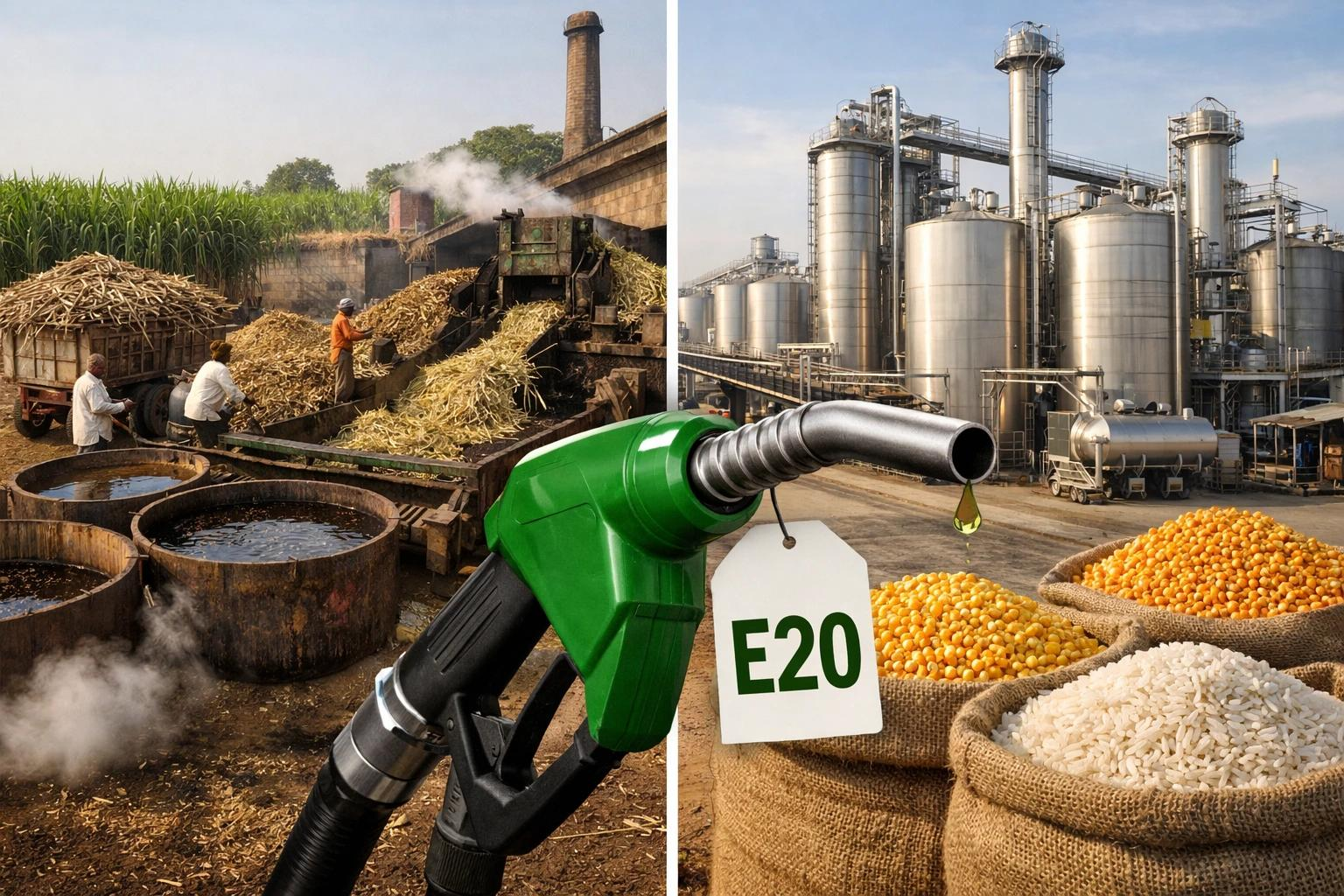
Ethanol is a renewable biofuel derived primarily from agricultural feedstocks such as sugarcane, maize, and other biomass sources. Blending ethanol with petrol helps reduce greenhouse gas emissions and decreases the country’s reliance on fossil fuels.
The nomenclature of ethanol blends reflects the percentage of ethanol mixed with petrol:
| Variant | Ethanol Content |
|---|---|
| E22 | 22% |
| E25 | 25% |
| E27 | 27% |
| E30 | 30% |
India has already achieved substantial progress under its ethanol blending programme, and the latest excise exemption is expected to accelerate the transition towards higher blending levels.
Benefits for the Economy and Environment
Experts believe the policy could have multiple positive outcomes:
- For consumers: Potential improvement in fuel affordability for eligible blends.
- For farmers: Increased demand for ethanol feedstocks may enhance rural incomes.
- For the economy: Reduced expenditure on crude oil imports.
- For the environment: Lower vehicular emissions and a smaller carbon footprint.
Advancing India’s Biofuel Goals
The excise duty waiver forms part of India’s long-term strategy to expand the use of renewable fuels and achieve greater self-reliance in the energy sector.
As the country moves towards adopting higher ethanol blends, the initiative is expected to strengthen the domestic biofuel ecosystem while contributing to national climate and sustainability objectives.