Business
Apple and Google Announce Historic Partnership: Gemini AI to Power the New Siri

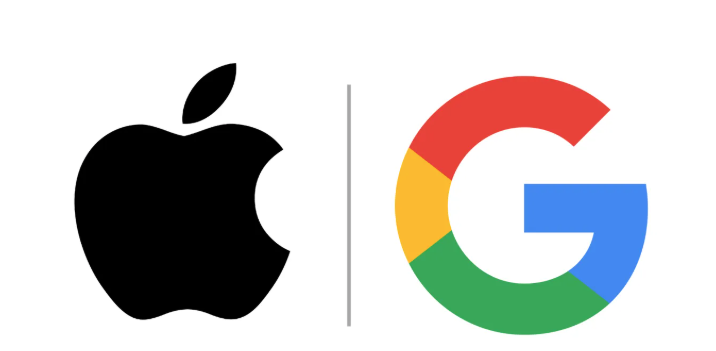
In a move that has sent shockwaves through Silicon Valley, Apple has officially finalized a multi-year partnership with Google to integrate the Gemini Artificial Intelligence models into its ecosystem. This collaboration marks a pivotal shift in the AI arms race, positioning the two tech giants as a unified front against the dominance of Microsoft and OpenAI.
For years, Apple’s voice assistant, Siri, was criticized for lagging behind its competitors in natural language understanding. With the rollout of Apple Intelligence 2.0, Apple is now leveraging Google’s “Gemini” to handle complex reasoning tasks that were previously impossible for the assistant.
While Apple’s on-device processing handles basic tasks to ensure privacy, the “heavy lifting”—such as generating long-form content, complex coding assistance, and deep-data synthesis—will now be routed through Google’s ultra-fast Gemini servers.
This deal brings Google’s AI capabilities to over 2 billion active Apple devices worldwide, including iPhones, iPads, and MacBooks.
Apple has maintained a “Privacy-First” clause. Any data sent to Google’s cloud is anonymized, and Google is contractually prohibited from using this data to train its public models or build advertising profiles.
This partnership follows Apple’s initial integration with ChatGPT, signaling that Apple intends to offer a “multi-model” approach, allowing users to choose which AI “engine” they prefer for specific tasks.
Industry analysts suggest that this deal is a strategic masterstroke for Google. By becoming the backbone of the iPhone’s AI, Google secures its spot as the world’s leading AI provider, even as traditional search engine revenue faces uncertainty. For Apple, it closes the “innovation gap” without the need to spend decades catching up on Large Language Model (LLM) development.
Starting with the upcoming iOS 19.4 update, users will notice a significantly more “human” Siri. The assistant can now remember context across multiple days, summarize hour-long meetings into concise bullet points, and even interact with third-party apps to perform complex sequences, like “find the flight receipt in my mail and add the hotel address to my calendar.”
The Apple-Google alliance of 2026 represents a pragmatic era of technology where former rivals collaborate to meet the massive compute demands of the AI age. As Siri evolves from a simple voice command tool into a sophisticated digital agent, the boundary between human intent and machine execution continues to blur.