News
US Gas Prices Hit 4-Year High as Hormuz Blockade Chokes Global Supply; Trump Faces Diplomatic Pushback

Domestic gas prices in the United States have surged to their highest levels since 2022, crossing the psychological barrier of $4 per gallon this week. The rapid spike, driven by the ongoing conflict in West Asia and Iran’s strategic “chokehold” on the Strait of Hormuz, has left the Trump administration scrambling for solutions as public dissatisfaction grows over rising inflation and energy costs.
According to the latest data from AAA, the national retail average for a gallon of regular gasoline jumped to $4.08 on Saturday, April 4, 2026—a sharp increase from the $2.98 average recorded just before the conflict began on February 28. For the American consumer, this translates to roughly ₹92 to ₹105 per liter (when converted to Indian currency), a price point rarely seen in the US market outside of major global crises.

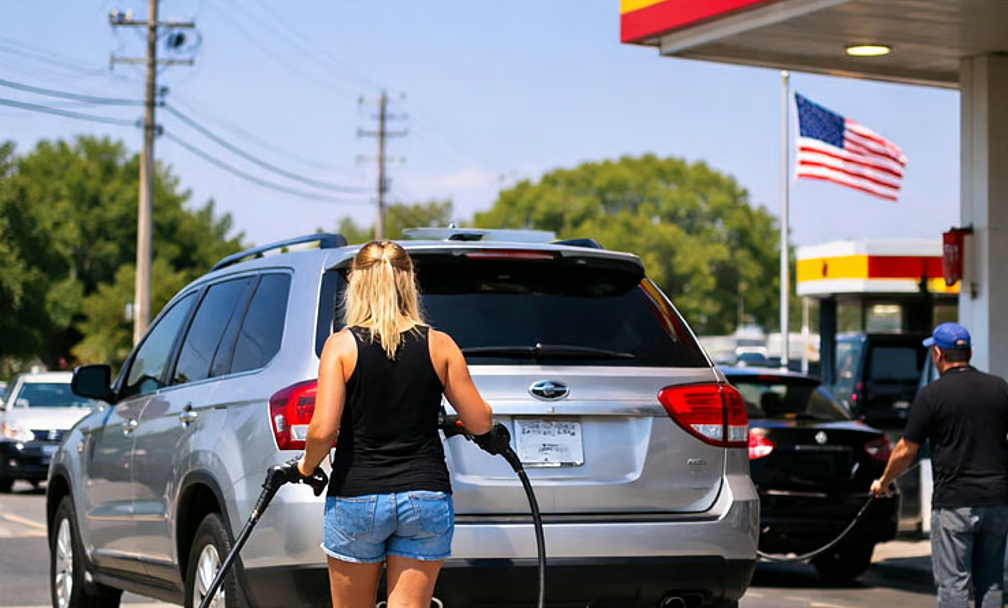
The impact is even more severe in states like California and Washington, where averages have skyrocketed to $5.89 and $5.35 per gallon, respectively. Diesel prices, critical for the US supply chain and freight industry, have seen an even more dramatic leap, soaring from $3.76 to $5.45 per gallon in a matter of weeks.


The primary catalyst for this “energy shock” is the effective closure of the Strait of Hormuz, a narrow waterway through which more than 20% of the world’s daily oil consumption passes. Following the escalation of US-Israeli strikes on Iranian infrastructure, Tehran has restricted passage through the strait, causing Brent Crude to shatter the $115 per barrel mark.
In a significant diplomatic setback for the White House, President Trump’s call for a “Coalition of the Willing” to send warships to the Gulf to forcibly reopen the strait has been met with cold shoulders from traditional allies. Nations including the UK, France, and Germany have reportedly declined the request, citing fears of being dragged into a direct, full-scale regional war. This isolation has left Washington with limited leverage to ease the supply constraints that are currently paralyzing global energy markets.
With the “war premium” now deeply embedded in the price of every gallon, the cost of essential goods in the US is beginning to climb, fueling a wave of anti-government sentiment. Economic analysts warn that if the blockade continues, oil could hit $150 per barrel within the month, potentially tipping the US economy into a recession during a critical election-preparatory cycle.
For the Trump administration, the crisis represents a double-edged sword: while the President continues to talk tough on Iran, the “Stone Age” rhetoric is being met with a “Modern Age” energy crisis at home that his administration is finding increasingly difficult to contain.